What Is Dry Needling?
It looks LIKE like acupuncture, but it’s NOT!

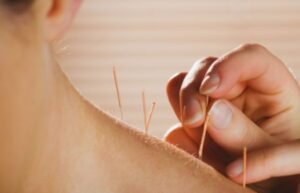
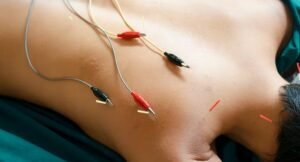
Dry needling is a skilled, physician-applied therapy using fine, sterile filiform needles (thin, flexible, not hollow) to stimulate neuromusculoskeletal structures. Unlike acupuncture, which is rooted in Eastern mysticism, modern dry needling is grounded in Western anatomy, physiology, and neurobiology, with hundreds of peer-reviewed studies validating its use in tens of thousands of patients.
Dry needling helps the body heal naturally — by releasing tight muscles, calming irritated nerves, and improving circulation to painful or inflamed areas. It’s a safe, gentle, and effective way to support recovery, relieve pain, and restore healthy movement.
There are 4 distinct clinical models (Trigger Point → Segmental → Neurologic/Integrative → Functional), 8 specific techniques (superficial, deep, perineural, periosteal, fascial, paraspinal, ENS, dynamic), and 4 distinct realms of clinical outcomes and goals (local, segmental, systemic, functional).
 NOT ALL DRY NEEDLING IS THE SAME!
The Integrative Dry Needling (IDN) system is one of the most comprehensive dry needling training programs available, integrating ALL major models, techniques, and physiologic applications into a single unified approach. This level of training ensures analysis from every angle — muscular, neurologic, circulatory, and systemic.
 Always ask to see certification in IDN — it represents advanced education, clinical experience, and demonstrated competency in all recognized models of dry needling.
How It Works
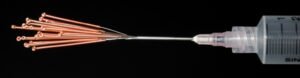
For those ‘afraid of needles’…take a look at that picture…it’s TWENTY of the needles used of dry needling INSIDE of a small hypodermic needle!!!
Dry needling produces its effects through multiple physiologic mechanisms, each targeting a different layer of healing and recovery:
- Trigger point & tissue release — Loosens taut muscle bands, adhesions, and abnormal endplate activity.
- Neuro-modulation — Calms overactive nerves and spinal reflexes, reducing pain and sensitivity.
- Circulatory effects — Improves oxygenation, blood flow, and lymphatic drainage to accelerate recovery.
- Immune & inflammatory balance — Shifts the body from a pro-inflammatory to a pro-healing state by influencing macrophages, cytokines, and nitric oxide.
- Systemic regulation — Helps rebalance the autonomic nervous system, supporting stress recovery and overall healing.
- Quantitative Sensory Testing (QST) — Assesses nerve sensitivity and guides individualized care plans.
- Electrical Nerve Stimulation (ENS) — Gentle current applied through needles enhances pain relief, reduces spasm, and mobilizes scar tissue.
Benefits
- Relaxes tight muscles: Releases knots and tension that limit movement.
- Calms nerves & pain signals: Helps reset overactive nerve pathways.
- Improves circulation: Brings fresh blood and oxygen to sore or injured areas.
- Supports healing: Activates your body’s natural repair process in muscles, tendons, and joints.
- Restores balance: Resets stress and recovery systems so your body can heal more efficiently.
Common Uses & Conditions Treated
Dry needling is clinically effective for a wide range of conditions, including:
- Spinal pain — whiplash, chronic neck or back stiffness, disc-related pain
- Headaches & migraines — cervicogenic, tension-type, occipital neuralgia
- Shoulder & extremity disorders — rotator cuff injuries, frozen shoulder, tennis elbow, carpal tunnel
- Hip & knee dysfunction — IT band syndrome, patellofemoral pain, bursitis
- Tendinopathies & ligament injuries — plantar fasciitis, Achilles tendinopathy, lateral epicondyle pain
- Sports & overuse injuries — enhanced recovery and reduced recurrence
- Neuropathic syndromes — sciatica, radiculopathy, entrapment neuropathies
- Chronic pain with central sensitization — widespread neurogenic inflammation and hypersensitivity